

Quick answer: Morocco is one of the most rewarding and welcoming destinations for Black American travelers. U.S. citizens need no visa for stays under 90 days, the country is generally safe (including for Black women traveling solo), and the cultural payoff is real — Morocco sits at the northern end of the old trans-Saharan trade routes, and that history is alive today in Gnaoua music, Amazigh (Berber) villages, and the everyday diversity of Moroccan cities. The sweet spot for a first trip is 10 days, spring or autumn, covering Marrakech, the Sahara at Merzouga, Fes, and the coast at Essaouira.
We’re Sahara Discovery, a Morocco-based tour operator. We run trips from Marrakech, Fes and Casablanca year-round, and a meaningful share of our guests are Black Americans planning a first trip to the African continent. This guide is the honest version of what we tell them — what’s true, what’s overblown, what to budget, and how to make the heritage side of the trip more than a photo stop.
Key takeaways
- Visa: None required for U.S. passport holders for stays up to 90 days. Passport valid 6+ months.
- Safety: Low violent-crime risk for tourists. The real “issues” are persistent vendors and overpricing, not danger.
- Best time: March–May and September–November. Summer is hot inland; the coast stays comfortable.
- Budget: Roughly $120–250/day mid-range, all-in, excluding flights.
- Heritage angle: Gnaoua music and the trans-Saharan story connect Morocco directly to sub-Saharan and diaspora history.
- Best first itinerary: 10 days — Marrakech → Sahara (Merzouga) → Fes → Chefchaouen/Essaouira.
Why Morocco lands differently for Black American travelers
Most “best places to travel” lists sell Morocco on color and chaos — the souks, the spices, the blue town. All real. But for a lot of our Black American guests, the deeper draw is that Morocco doesn’t sit outside African history; it’s woven into it.
Morocco was the Mediterranean end of the trans-Saharan trade routes that moved gold, salt, ideas and people between West Africa and the wider world for centuries. Cities like Marrakech and Fes grew on that exchange. That history isn’t only in museums — you hear it in Gnaoua music, the spiritual sound carried north by sub-Saharan Africans and now one of Morocco’s signature art forms. You see it in the faces of Moroccans, who are Amazigh (Berber), Arab, and sub-Saharan African, often all at once.
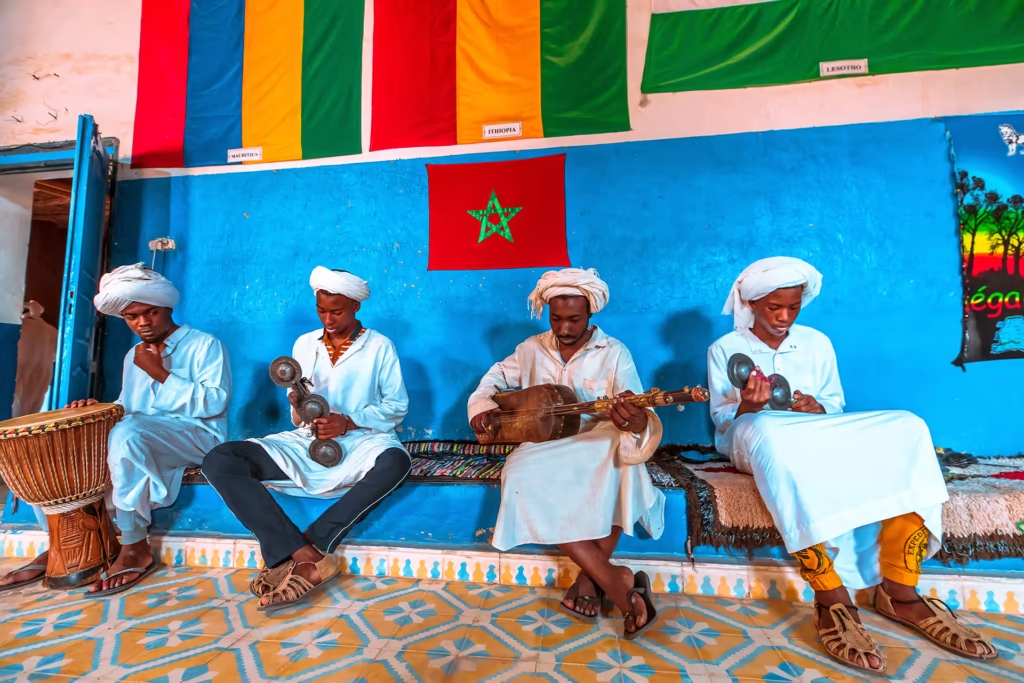
So a well-planned trip here can do two things at once: it’s a genuinely great holiday — desert, mountains, food, coast — and it’s a chance to stand inside a piece of African and diaspora history that rarely makes the U.S. travel brochures.
Is Morocco safe for Black American travelers?
Yes — Morocco is generally safe for Black American travelers, with the usual big-city street smarts. Violent crime against tourists is rare. The U.S. State Department keeps Morocco at its standard “exercise normal precautions” level (the same as much of Western Europe). What you’ll actually deal with is commercial, not criminal: insistent shop owners, “helpful” strangers who expect a tip, and tourist pricing.
A few honest notes specific to the question we get most:
- On being noticed. In rural areas and small towns you may get looked at — not with hostility, but curiosity, the same way any foreign visitor is clocked. In big cities (Marrakech, Casablanca, Rabat, Tangier) you’ll barely register. Learning two Arabic greetings flips most interactions from transactional to warm almost instantly.
- On race. Moroccans themselves span the full range of complexions, including many Black Moroccans, especially in the south (Ouarzazate, the Draa and Ziz valleys, Merzouga). You will not be the only Black person in the room.
- On harassment. The most common complaint — from travelers of every background — is street vendors and faux guides, not anything targeted. We cover how to shut that down politely below.
Is Morocco safe for Black women traveling solo?
Yes, with sensible precautions — many do it every year. Solo female travelers report that the keys are dressing on the modest side, projecting confidence, being comfortable saying a firm “la, shukran” (no, thank you), and booking well-reviewed riads in central, walkable areas. Catcalling exists, as it does in many countries; it’s usually verbal and fades when ignored. Booking a guide or a small-group leg for the medinas and the desert takes the friction down to near zero.
Do U.S. citizens need a visa for Morocco?
No. U.S. passport holders can enter Morocco visa-free for stays of up to 90 days. Make sure your passport is valid for at least six months beyond your travel dates and has a blank page for the entry stamp. You’ll fill in a short arrival card and may be asked your hotel/riad address — keep it written down (in Arabic if you can; ask your accommodation for it on arrival).
That’s it. No advance e-visa, no fee, for tourism stays under three months.
When is the best time to visit Morocco?
Spring and autumn are ideal. Summer is fine on the coast but punishing in the desert and Marrakech; winter is mild by day and genuinely cold at night in the Sahara and the Atlas.
| Season | Months | What it’s like | Good for |
|---|---|---|---|
| Spring | Mar–May | Warm days, green valleys, wildflowers | Best all-round; Rose Festival (Kelaat M’Gouna, May) |
| Autumn | Sep–Nov | Warm, settled, smaller crowds | Best all-round; great desert nights |
| Summer | Jun–Aug | Hot inland (38°C+/100°F), pleasant coast | Essaouira & the Atlantic; Gnaoua World Music Festival, Essaouira (June) |
| Winter | Dec–Feb | Mild days, cold desert nights, snow in the Atlas | Cities, fewer tourists, lower prices |
If your trip is built around heritage and music, time it to the Gnaoua World Music Festival in Essaouira (June) — three days of Gnaoua masters (maâlems) playing alongside global artists, much of it free and open-air.
How much does a Morocco trip cost for Americans?
Morocco is excellent value next to Europe. Your biggest variable is accommodation and how much you move by private driver versus public transport. The ranges below are per person, per day, excluding international flights, as a 2026 planning guide.
| Style | Daily budget (USD) | Stays | Food | Getting around |
|---|---|---|---|---|
| Budget | $150–190 | Hostels, simple riads | Street food, local cafés | Trains, CTM/Supratours buses, shared grands taxis |
| Mid-range | $220–350 | Boutique riads | Mix of local + nicer restaurants | Private driver for desert legs |
| Luxury | $600+ | Design riads, luxury desert camps | Fine dining, private chefs | Private driver throughout, internal flights |
A few money facts that trip people up:
- Currency is the dirham (MAD), ~8.9 MAD ≈ $1, and it’s a “closed” currency — you can’t get it easily outside Morocco. Withdraw from ATMs on arrival; carry some cash, as many medina shops and rural stops are cash-only.
- Tipping is expected but small: a few dirhams for café service, 10% in sit-down restaurants, and a fair tip for guides and drivers.
- At Sahara Discovery we don’t publish fixed package prices — every trip is quoted on what you actually want (route, camp standard, private vs. small-group). Tell us your dates and we’ll cost it out.
What should I pack for Morocco?
Pack for a conservative-but-not-restrictive dress code, a big day-to-night temperature swing, and a lot of walking on uneven ground.
- Clothing that covers shoulders and knees for medinas, mosques’ exteriors and rural areas. Lightweight, breathable, layered. A scarf is the most useful single item — sun, dust, modesty, cold desert nights.
- Comfortable closed walking shoes. Medina lanes are stone, dust and the occasional puddle; sandals get rough.
- A warm layer even in summer — desert nights drop fast.
- Sunscreen, refillable water bottle, portable charger, and a small bag that zips (pickpocketing in crowds is the main petty risk).
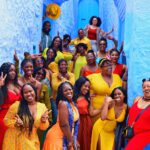
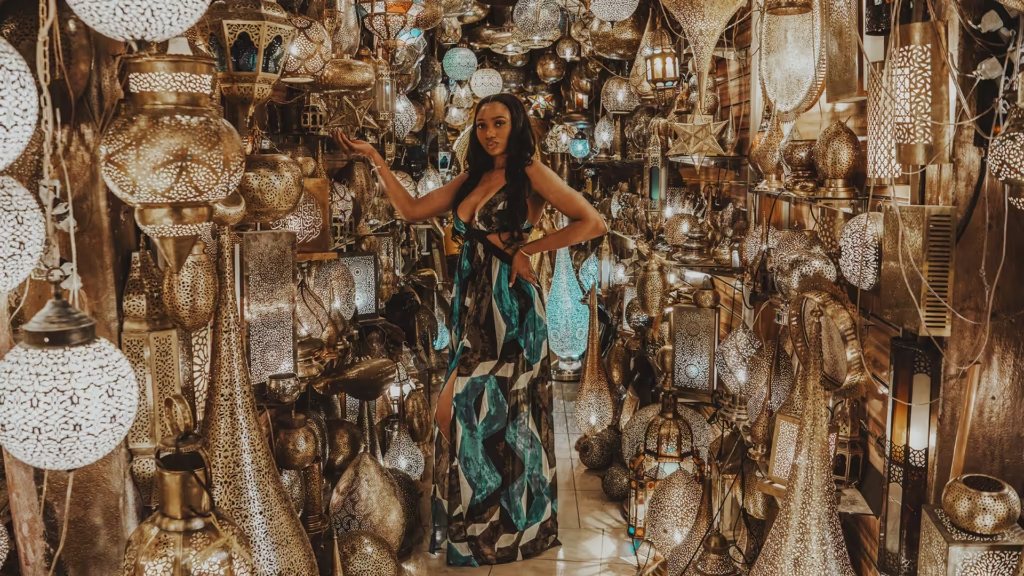
- Style note: Morocco is a backdrop made for bold color. Plenty of our guests lean into kaftans and statement pieces — it photographs beautifully and reads as respectful, not costume.
Race, culture and being seen — the honest version
We’d rather tell you the truth than the brochure line. Here’s what Black American guests have reported back over the years:
- In the cities, you blend into a genuinely diverse crowd. No one’s tracking you.
- In small mountain or desert villages, foreign visitors of any kind get curious looks. It reads as interest, not threat. A greeting in Darija (Moroccan Arabic) usually turns it into a conversation, a mint tea, or an invitation.
- Some travelers describe a particular kind of welcome — a sense of being received as part of a shared African story rather than as an outsider. That’s not universal and we won’t over-promise it, but it comes up often enough to mention.
- Hair and skin: salons for textured/Afro hair exist mainly in bigger cities and are not guaranteed; bring what you need. Sunscreen still matters in the desert glare.
The thing that changes the trip most isn’t avoiding anything — it’s a few words of the language and a guide who can read a room.
Money, haggling and avoiding common scams
Two skills make Morocco smooth: haggling without stress and declining without guilt.
How to haggle in a Moroccan souk:
- Decide what the item is worth to you before you ask.
- Counter the first price at roughly 30–40% of what’s quoted.
- Stay friendly. Smile, joke, be ready to walk — walking away is the most powerful move and often gets you called back.
- If you don’t intend to buy, don’t start negotiating. Beginning a haggle is treated as intent.
The common ones to know:
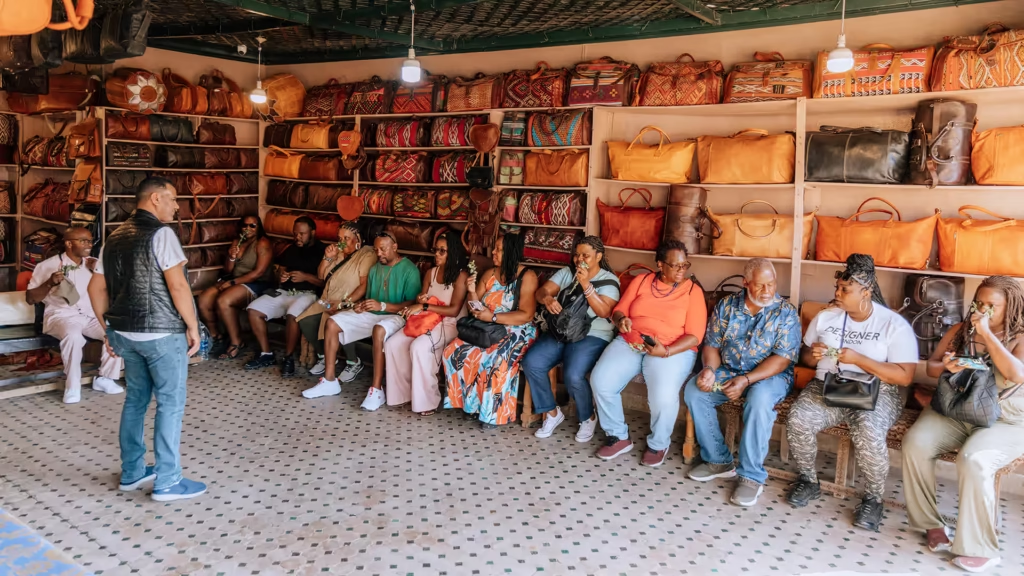
- “Free” guides who attach themselves to you and then demand payment. A polite, firm “la, shukran” and continuing to walk works.
- “This way is closed / the tannery is this way” redirects that end at a shop. Trust your map.
- Tourist pricing on taxis — agree the fare first, or insist on the meter (“compteur”). In cities, app-based rides remove the haggle entirely.
Essential Moroccan Arabic (Darija) phrases
Moroccans speak Darija (Moroccan Arabic) and Amazigh/Tamazight; French is widespread, and English is growing in tourism. You don’t need fluency — these six phrases do most of the heavy lifting.
| Phrase | Meaning | Notes |
|---|---|---|
| As-salāmu ʿalaykum | Peace be upon you | Universal greeting; reply wa ʿalaykum salām |
| Shukran | Thank you | Shukran bzaf = thanks a lot |
| La, shukran | No, thank you | Your most-used phrase with vendors |
| Afak / ʿafak | Please / excuse me | Polite all-purpose word |
| Bshhal? | How much? | Opens any haggle |
| Wakha | OK / fine | Agreement |
Learning even the greeting changes how you’re treated. It signals respect, and respect is the currency that matters most here.
Cultural etiquette that earns goodwill
- Accept the mint tea. It’s the core ritual of Moroccan hospitality; declining can read as a snub. Sip slowly.
- Right hand for eating and greeting. The left is considered unclean for food.
- Ask before photographing people, especially in rural areas and of women. A smile and a gesture toward your camera is enough.
- Dress modestly near religious sites. Non-Muslims generally can’t enter working mosques (the Hassan II Mosque in Casablanca is the famous exception, via guided tour).
- Ramadan: if you visit during the holy month, eat discreetly in daytime and expect shifted hours. Evenings come alive after the fast breaks.
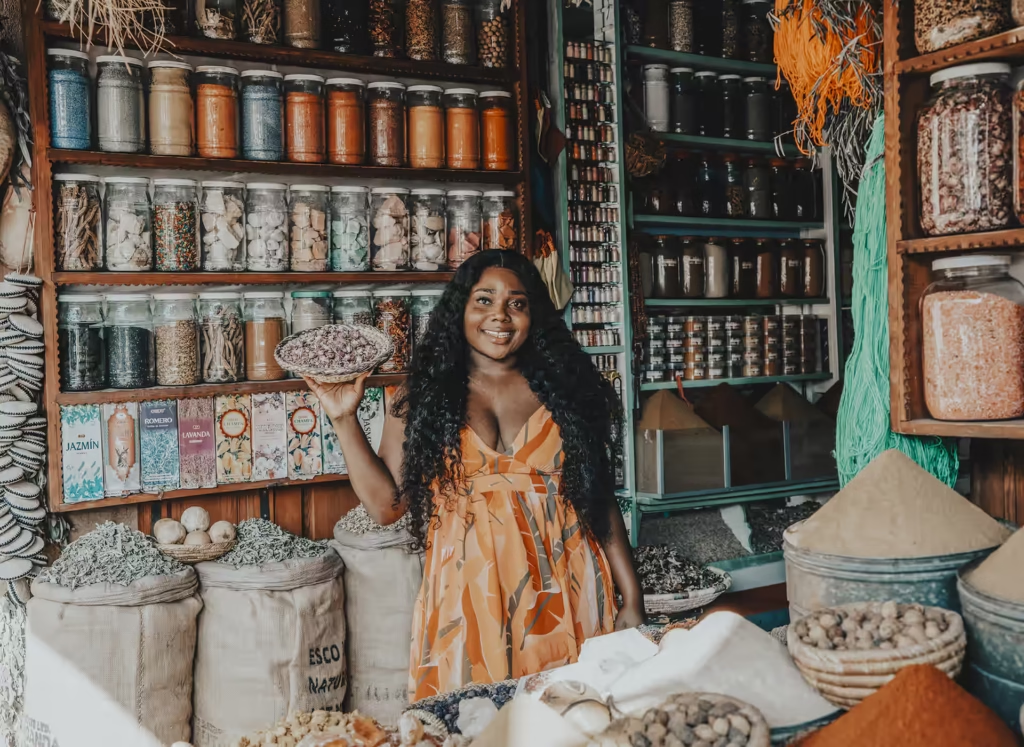
The heritage thread: Gnaoua, the trans-Saharan story and Black Morocco
If you want the trip to mean something beyond sightseeing, build it around this thread. Here’s the context worth carrying with you.
The Gnaoua (Gnawa) are descendants of sub-Saharan Africans — many originally brought north through the trans-Saharan trade, including via enslavement — who fused their spiritual practices with Moroccan Sufi Islam. The result is a music-and-trance tradition led by a maâlem (master musician) on the guembri, a three-stringed bass lute, driven by the clatter of iron qraqeb castanets. UNESCO inscribed Gnaoua on its list of Intangible Cultural Heritage of Humanity in 2019. It is, in a very real sense, West African spiritual memory preserved in Moroccan form.
Where to encounter it authentically:
- Essaouira — the spiritual home of Gnaoua and host of the Gnaoua World Music Festival each June.
- Marrakech — evening Gnaoua sessions and the musicians of Jemaa el-Fnaa square.
- The south (Ouarzazate, Khamlia near Merzouga) — villages founded by sub-Saharan communities where you can sit in on a session in a family home.
Pair that with the trans-Saharan history you can actually walk through — the old caravan cities, the ksour (fortified villages) of the Draa Valley, the kasbahs of Ouarzazate — and the desert stops being scenery and starts being a story you’re standing inside.
The best Morocco itinerary for Black American travelers (10 days)
Ten days is the sweet spot: enough to reach the real Sahara without rushing, and to balance heritage, cities and coast. This is the route we run most often. Browse all our Morocco itineraries for shorter and longer versions.
| Days | Base | Heart of it |
|---|---|---|
| 1–3 | Marrakech | Medina, Jemaa el-Fnaa, Bahia Palace, Gnaoua evening, cooking class |
| 4–5 | Sahara via Atlas | Aït Benhaddou, Dades/Todra gorges, Merzouga camp + camel trek |
| 6–7 | Fes | Fes el-Bali medina, Al-Qarawiyyin (world’s oldest university), tanneries |
| 8–10 | Chefchaouen + Essaouira | Blue city, then the Atlantic coast & Gnaoua venues |
Days 1–3 — Marrakech. Sunset in Jemaa el-Fnaa, the Bahia Palace and Saadian Tombs, the Majorelle Garden, a hammam, and a hands-on cooking class. Cap a night with live Gnaoua. Use a guide for the souk the first day; you’ll navigate solo happily after that.
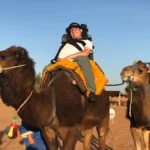
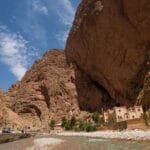
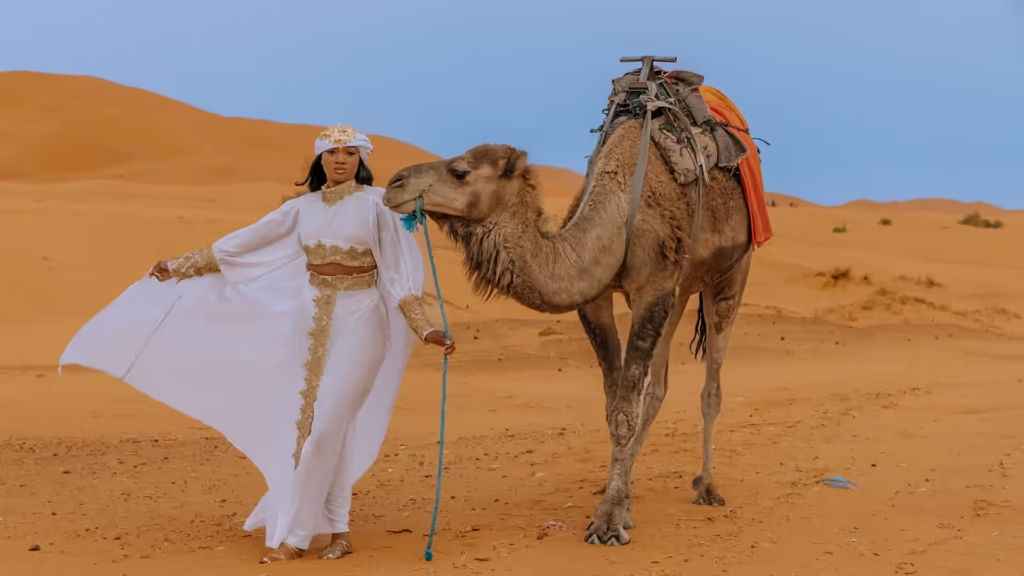
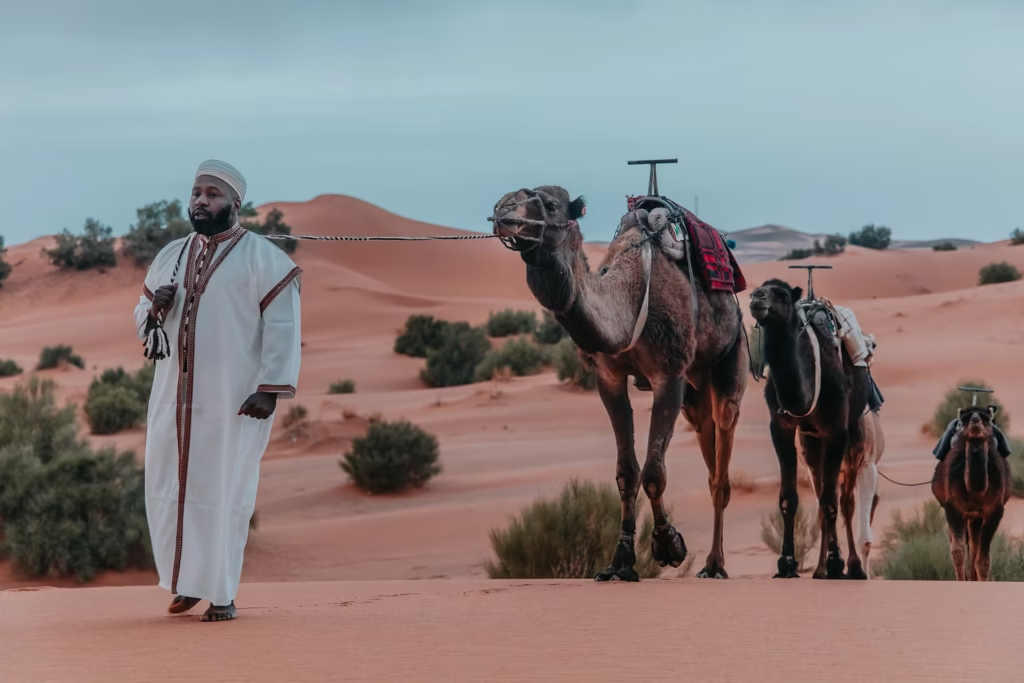
Days 4–5 — Over the Atlas to the Sahara. A spectacular drive over the Tizi n’Tichka pass to Aït Benhaddou (the kasbah from Gladiator and Game of Thrones), then the gorges, then dunes. You’ll ride camels into Erg Chebbi at Merzouga and overnight at a desert camp — standard or full-luxury, your call. This is the leg most guests rank as the trip’s emotional peak. See our 3-Day Marrakech Desert Tour to Merzouga if the desert is your priority and time is short.
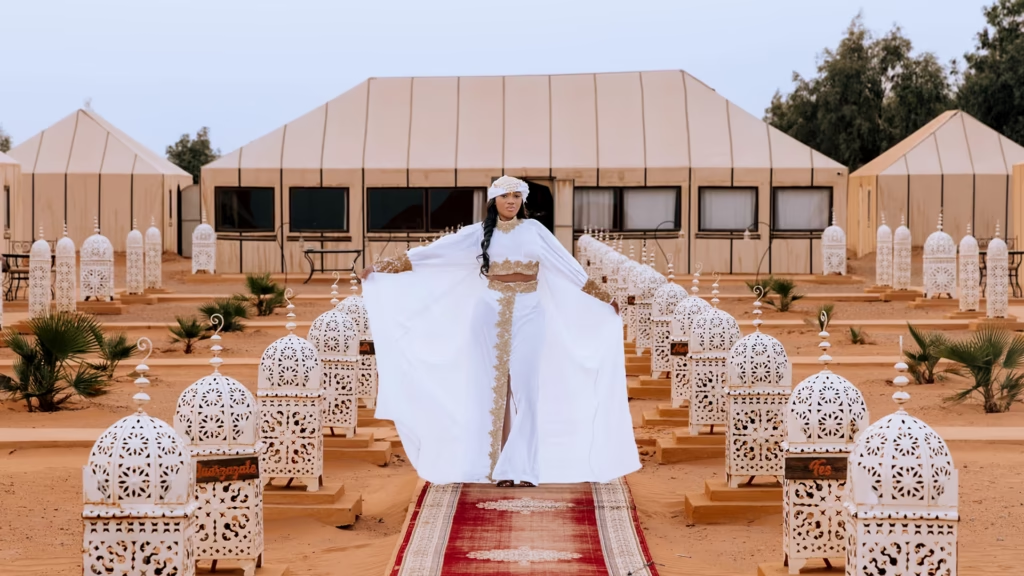
Days 6–7 — Fes. The medieval medina of Fes el-Bali is the largest car-free urban area in the world; you need a guide for the first pass and you’ll be glad of it. Visit Al-Qarawiyyin, founded in 859 CE by Fatima al-Fihri and recognized as the world’s oldest continually operating university, plus the famous tanneries.
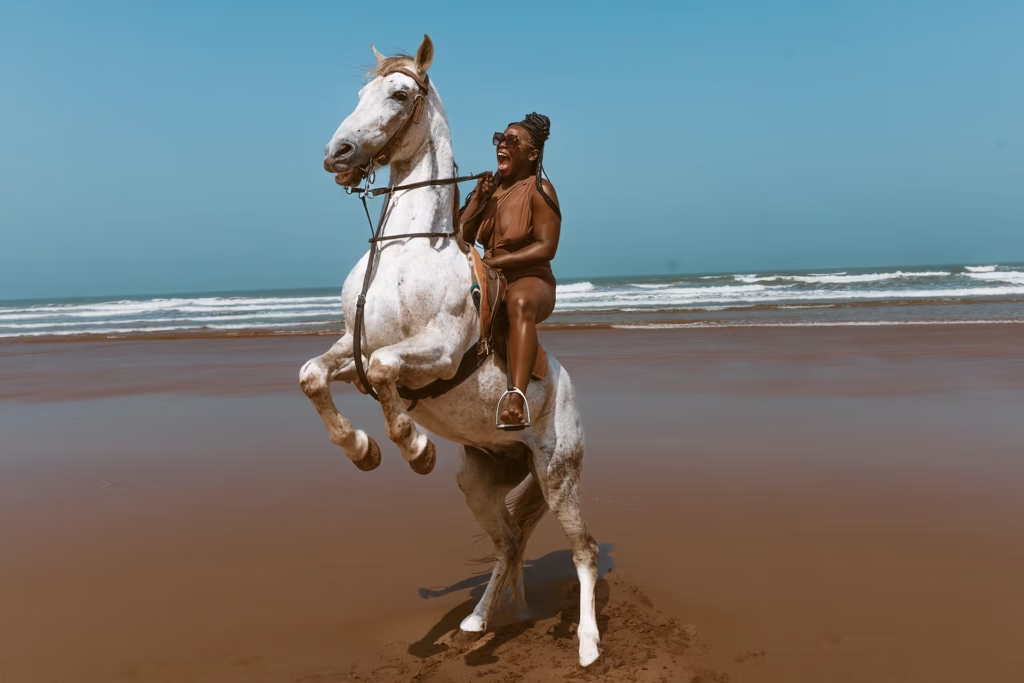
Days 8–10 — Chefchaouen and Essaouira. The blue-washed mountain town of Chefchaouen for the photos and the calm, then the Atlantic at Essaouira — Gnaoua heart, fresh seafood, ramparts, and that wide beach for horseback riding.
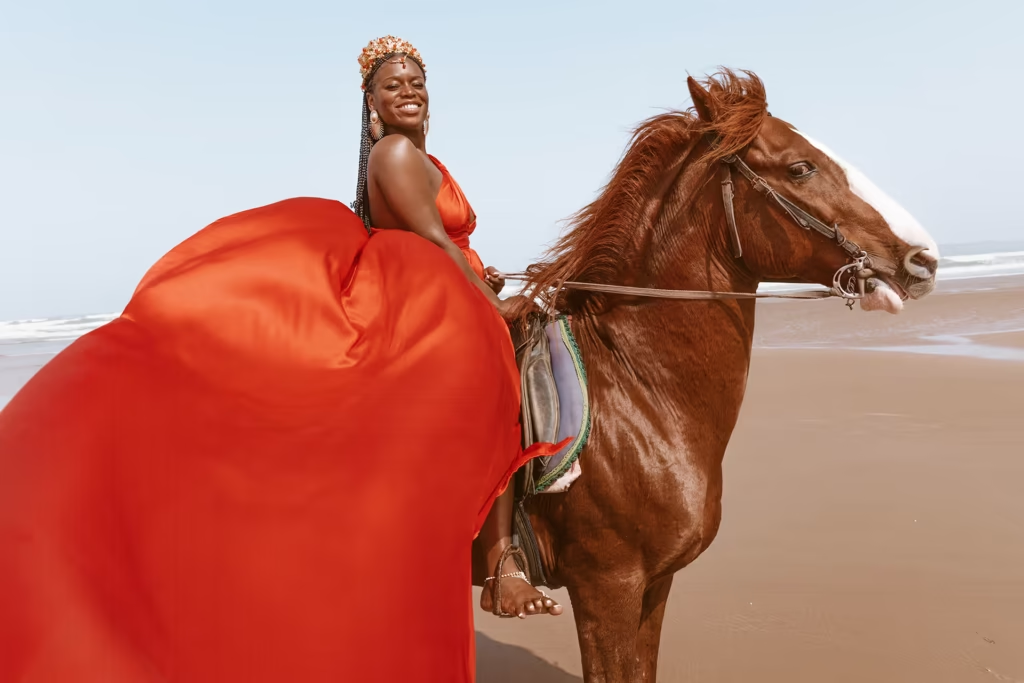
Short on time? Our 7-Day Morocco Itinerary: Marrakech to Fes hits the highlights, while the full 10-Day Morocco Itinerary adds the coast. Prefer company on the road? See our Morocco small group tours (max 12).
Health and safety essentials
- Water: Drink bottled or filtered water. Ease into street food rather than diving in day one.
- Sun & heat: The desert and Marrakech are intense midday. Hydrate, cover up, schedule the medina for mornings/evenings.
- Insurance: Get travel insurance that covers medical care and, ideally, a desert/adventure clause.
- Documents: Keep a photo of your passport on your phone and a copy separate from the original.
- In the medina: Stay on busier lanes after dark, keep your bag zipped and in front in crowds, and save your riad’s address in Arabic.
Emergency numbers in Morocco:
- Police (cities): 19
- Ambulance / SAMU: 15
- Gendarmerie Royale (highways & rural): 177
- Save your nearest U.S. Consulate (Casablanca) and Embassy (Rabat) contacts before you go.
Experiences worth booking (not just seeing)
The trips people remember are the ones where they did something with locals, not just photographed them.
- A Gnaoua session — in Essaouira, Marrakech, or a family home in Khamlia near Merzouga.
- A women’s argan-oil or weaving cooperative in the Souss or the High Atlas — fair-trade, women-run, and the real product (not the roadside fakes).
- A cooking class in Marrakech or Fes — market shop, then make a tagine and bread you’ll actually want to recreate at home.
- A desert overnight at Merzouga — camel trek in, dunes at sunset, a drum circle, stars with zero light pollution, sunrise over the erg.
- Coastal Essaouira — seafood off the boats, the ramparts, and that beach ride.
We can build any of these into a private route. Tell us what matters most to you and we’ll shape the trip around it rather than the other way around.
Frequently asked questions
Is Morocco expensive for American travelers?
No — it’s good value. Street food runs $2–5, a mid-range meal $10–20, and a nice dinner $30+. Accommodation spans hostel dorms (~$15) to luxury riads and desert camps ($400+). Most travelers do Morocco comfortably on $120–250 per person per day, excluding flights.
Is Morocco safe for Black Americans?
Yes. Morocco is generally safe for tourists, including Black American travelers, with normal big-city precautions. The main nuisances are persistent vendors and tourist pricing, not danger. Moroccans are themselves ethnically diverse — Amazigh, Arab and sub-Saharan African — so you won’t stand out the way you might expect, especially in cities.
Is Morocco safe for Black women traveling solo?
Yes, with sensible precautions. Solo female travelers report feeling safe by dressing modestly, staying confident, declining vendors firmly, choosing central well-reviewed riads, and using guides for medinas and the desert. Catcalling can happen but is usually verbal and fades when ignored.
Do Americans need a visa for Morocco?
No. U.S. citizens can stay visa-free for up to 90 days. Your passport should be valid for at least six months beyond entry.
What should I not wear in Morocco?
Avoid very revealing clothing in cities, rural areas and near religious sites — cover shoulders, chest and knees. Beach towns like Essaouira and Agadir are more relaxed, and swimwear is fine at pools and beaches.
Can you drink alcohol in Morocco?
Yes, in licensed restaurants, bars, hotels and some shops (Carrefour/Marjane). Many Moroccans abstain for religious reasons, so drink where it’s served rather than in the street.
What’s the best way to experience Gnaoua culture?
Time your trip to the Gnaoua World Music Festival in Essaouira (June), book a music workshop or a session with a maâlem, or visit a sub-Saharan-founded village like Khamlia near Merzouga. Many of our routes can include a private Gnaoua experience.
How many days do you need in Morocco?
Seven days covers Marrakech, the Sahara and Fes at a steady pace. Ten days adds Chefchaouen and the coast without rushing — our most-recommended length for a first trip.
Plan your Morocco trip
A good Morocco trip for Black American travelers isn’t about avoiding the country — it’s about leaning into it: a few words of Darija, a guide who reads the room, the desert at Merzouga, and a Gnaoua night that connects the dots between West Africa and where you’re standing.
Sahara Discovery is a local operator running private and small-group trips from Marrakech, Fes and Casablanca. We don’t sell fixed packages — we quote each trip on your dates, pace and the experiences that matter to you. Send us your dates and what you want out of Morocco, and we’ll build the route around it.